
Jospin Mwisha 2026 Highly Commended
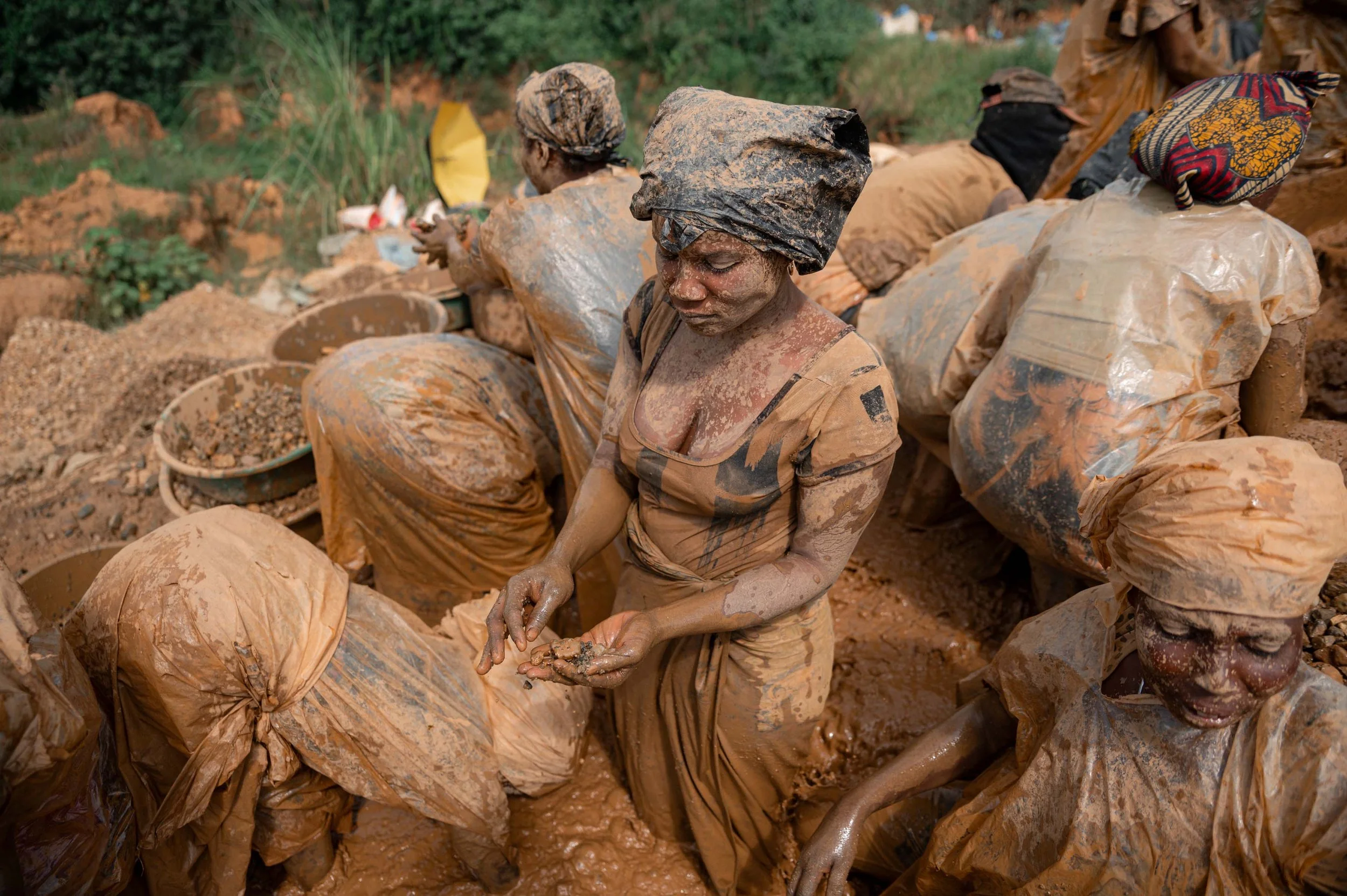
A war-displaced women miners sorting gold particles at an artisanal mining site in Mongbwalu. They carry out careful selection of gold-bearing stones under precarious conditions, in Mongbwalu, Ituri Province, June 16, 2026.
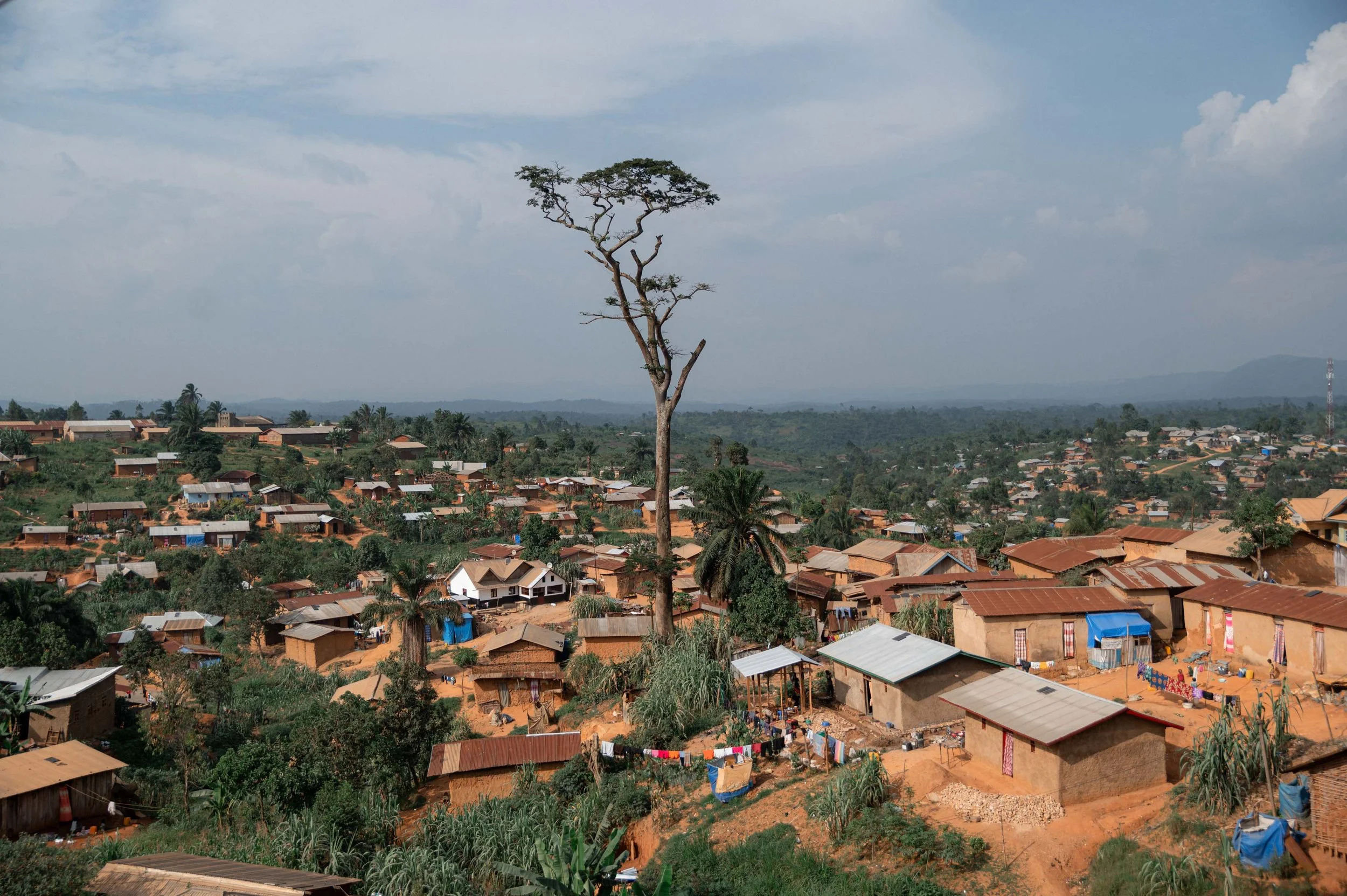
General view of a settlement in Mongbwalu where artisanal miners working in nearby mines live. These makeshift shelters are located close to gold extraction sites, in Ituri Province, June 16, 2026.
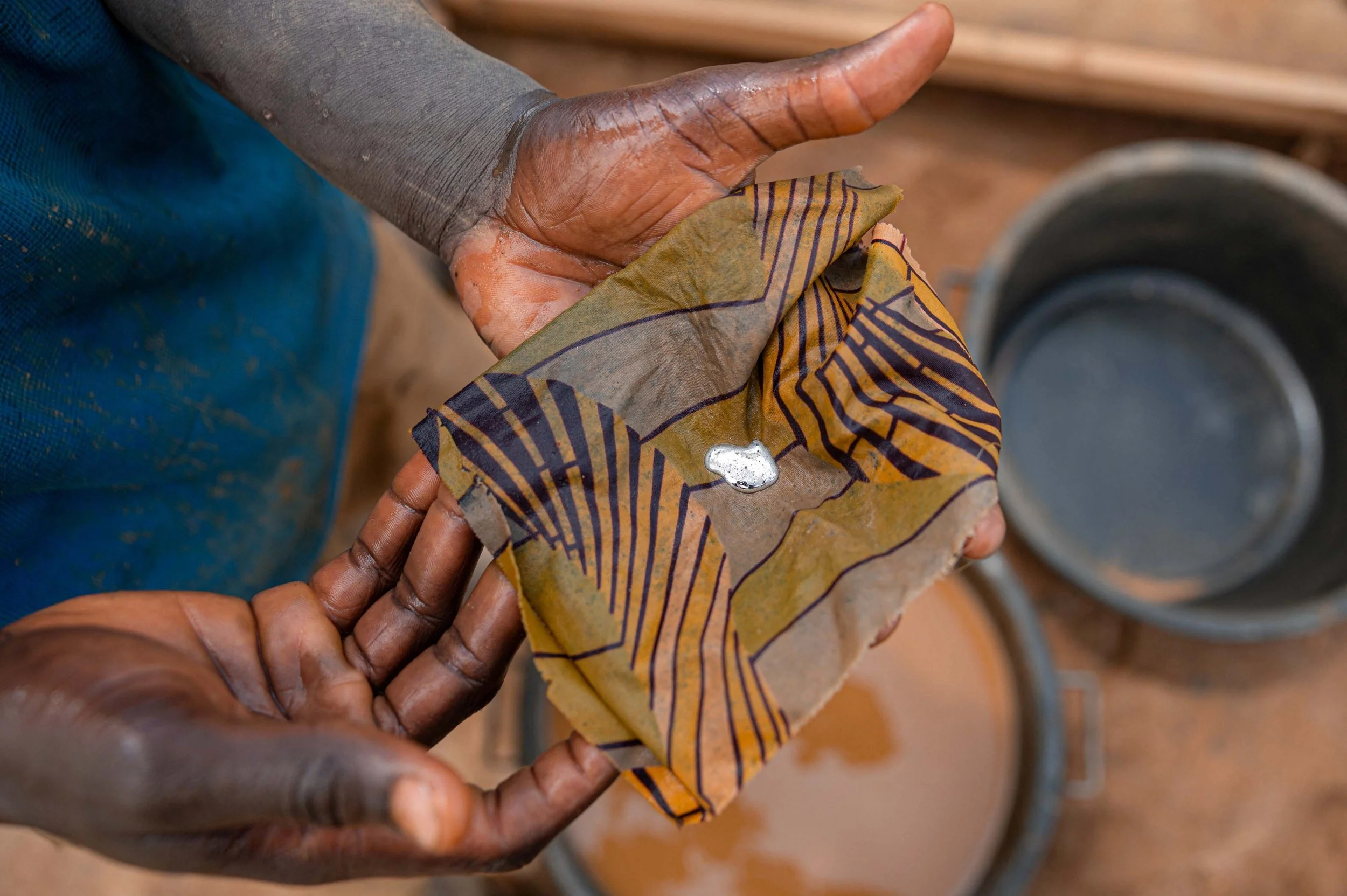
Close-up of the hand of Samuelle Sebi, an artisanal miner, holding gold particles obtained after the final sorting and concentration stages at an artisanal mine in Mongbwalu. At this stage, the gold still retains the dark appearance of the mineral concentrate from which it was extracted. It will later be heated and refined to remove remaining impurities and reveal its characteristic golden color, in Mongbwalu, Ituri Province, Democratic Republic of Congo, on June 16, 2026.
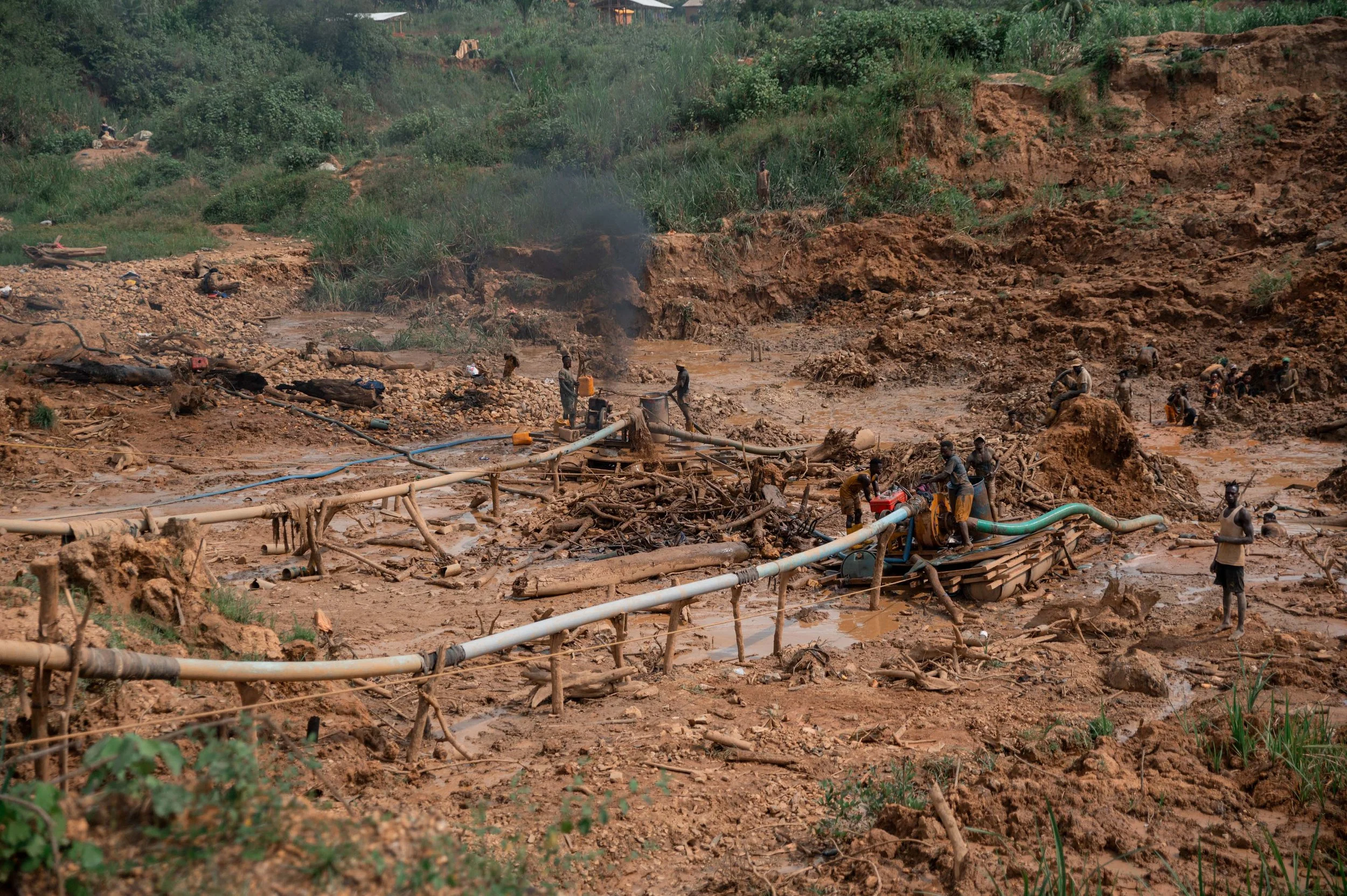
Artisanal miners work in a mining pit in Mongbwalu, where men and women, including some war-displaced people, have taken refuge after fleeing conflict and rebel violence. They take part in gold extraction and processing activities under precarious conditions, in Mongbwalu, Ituri Province, June 16, 2026.
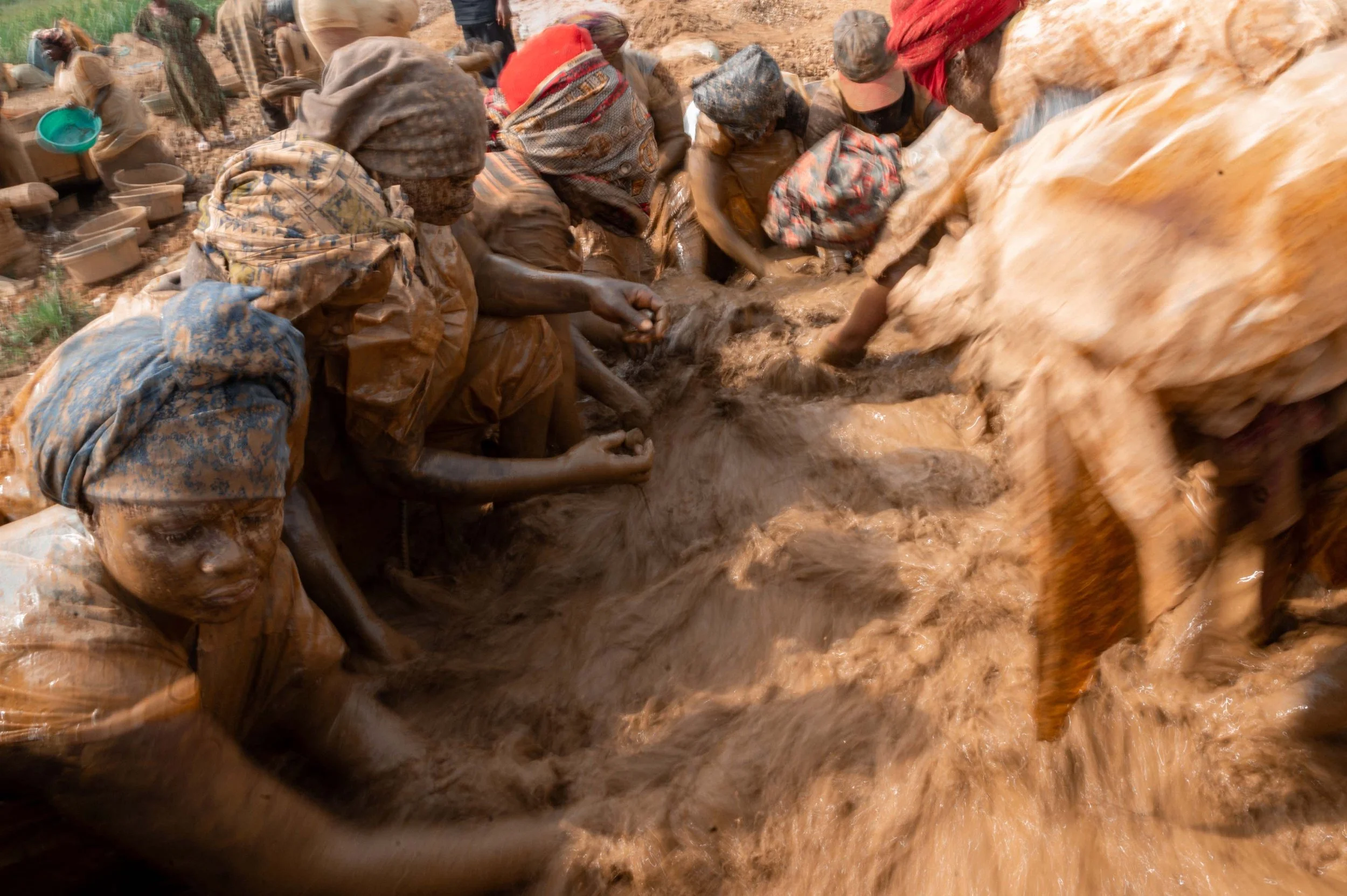
War-displaced women work at an artisanal mining site in Mongbwalu. They wear plastic bags over their clothing, locally known as “décalots,” to protect themselves from mud and dirt, and take part in sorting rocks containing gold particles. Their faces are marked by mud and fatigue. In the pit, men extract the ore and transport it using a suction system to the sorting area, where women select gold-bearing stones before they are crushed by machine. Mongbwalu, Ituri Province, June 16, 2026.
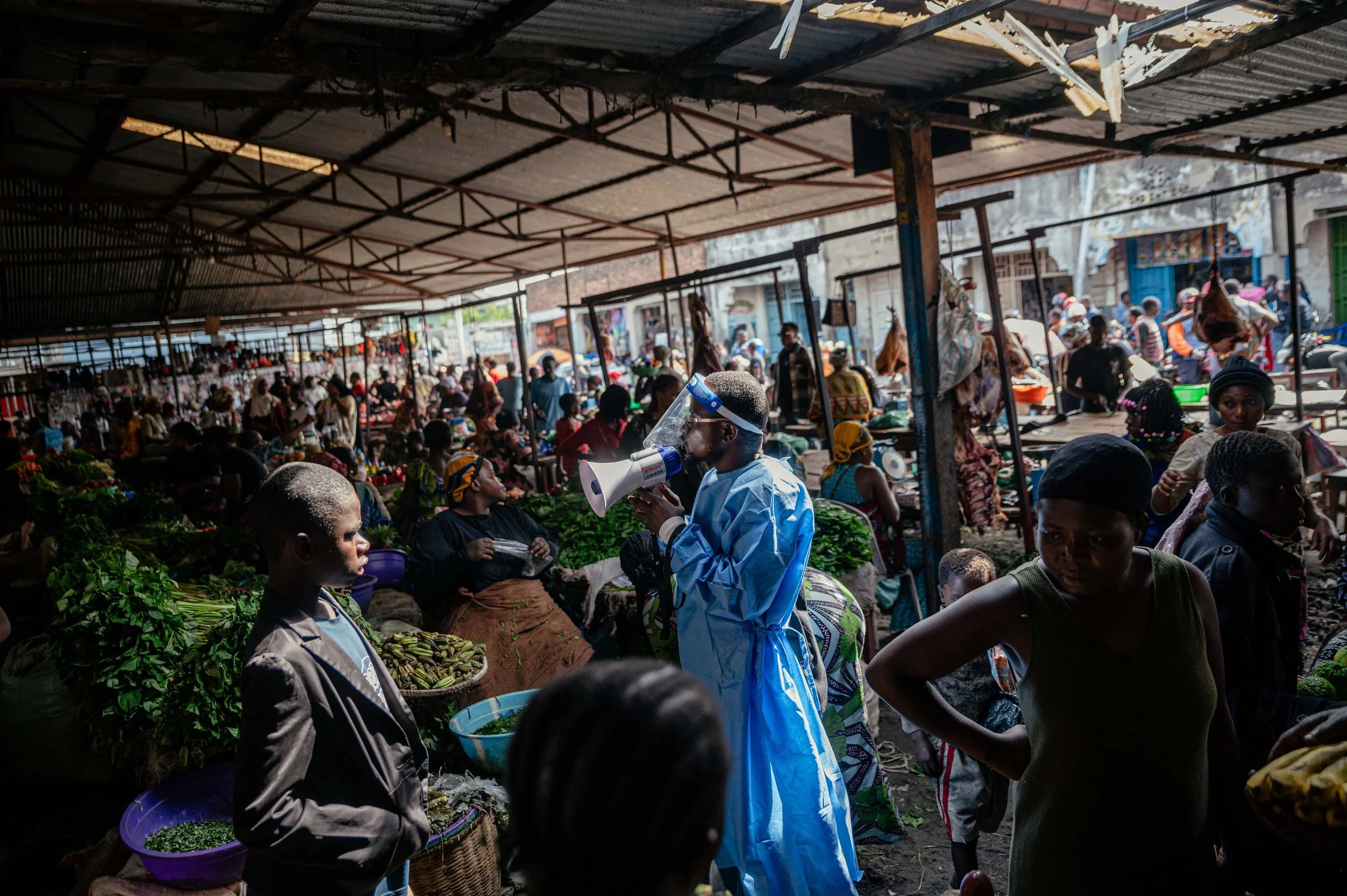
Irenge Biringanine Prince, leader of the U Report Goma community, dressed in protective equipment, raises awareness among traders alongside young members of the “U Report Goma” group who continue awareness activities at a La Nine market using megaphones and focus group discussions as part of Ebola prevention and awareness measures. Goma, May 29, 2026.
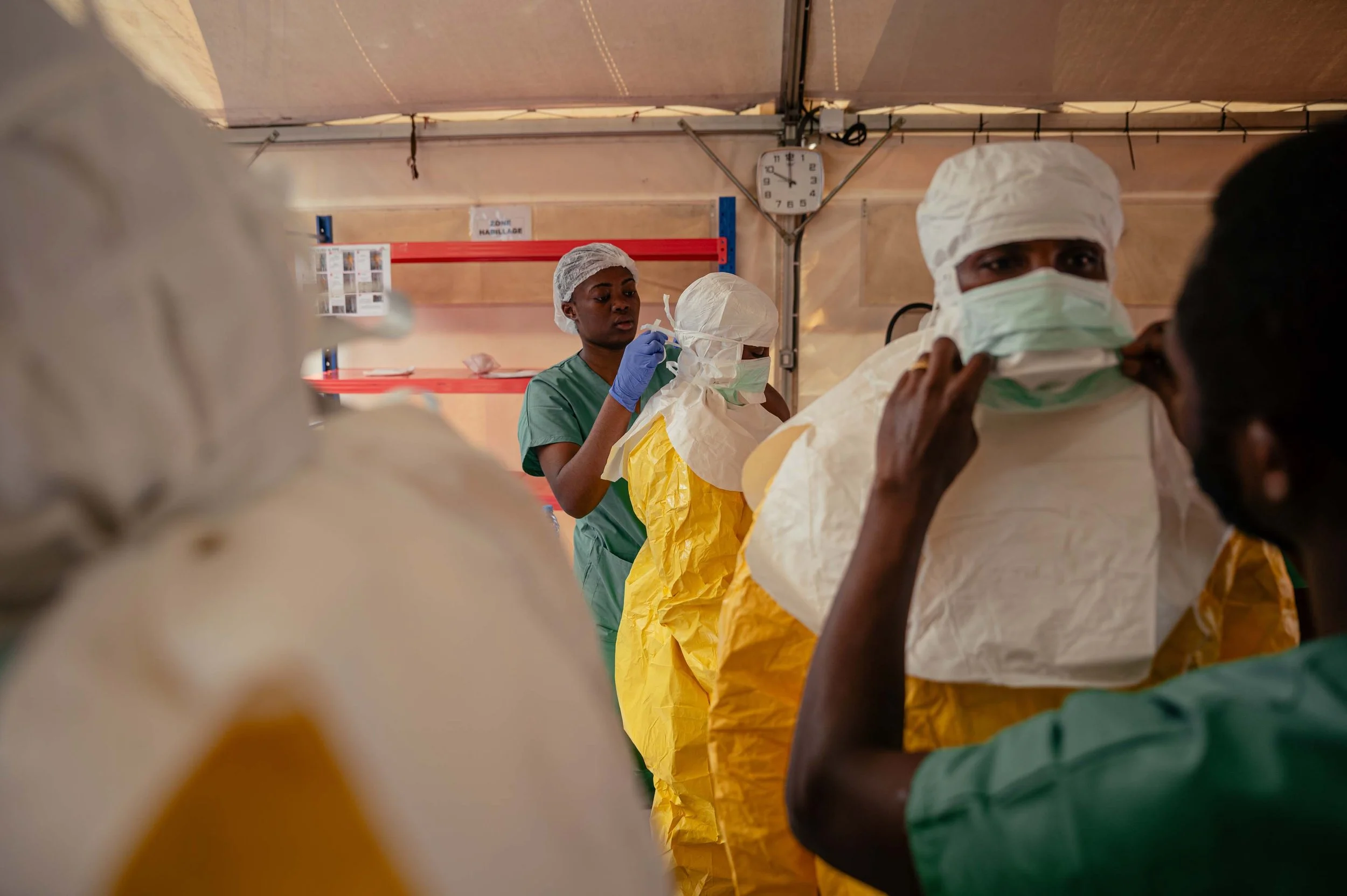
Healthcare providers put on personal protective equipment in the dressing area under the supervision of specialists before going to examine patients in the isolation ward during their shift at the Ebola Treatment Center (ETC) in Munigi, following its rehabilitation by MSF. The center is currently hosting five suspected cases and can accommodate up to 80 patients. Goma, Munigi, June 2, 2026.
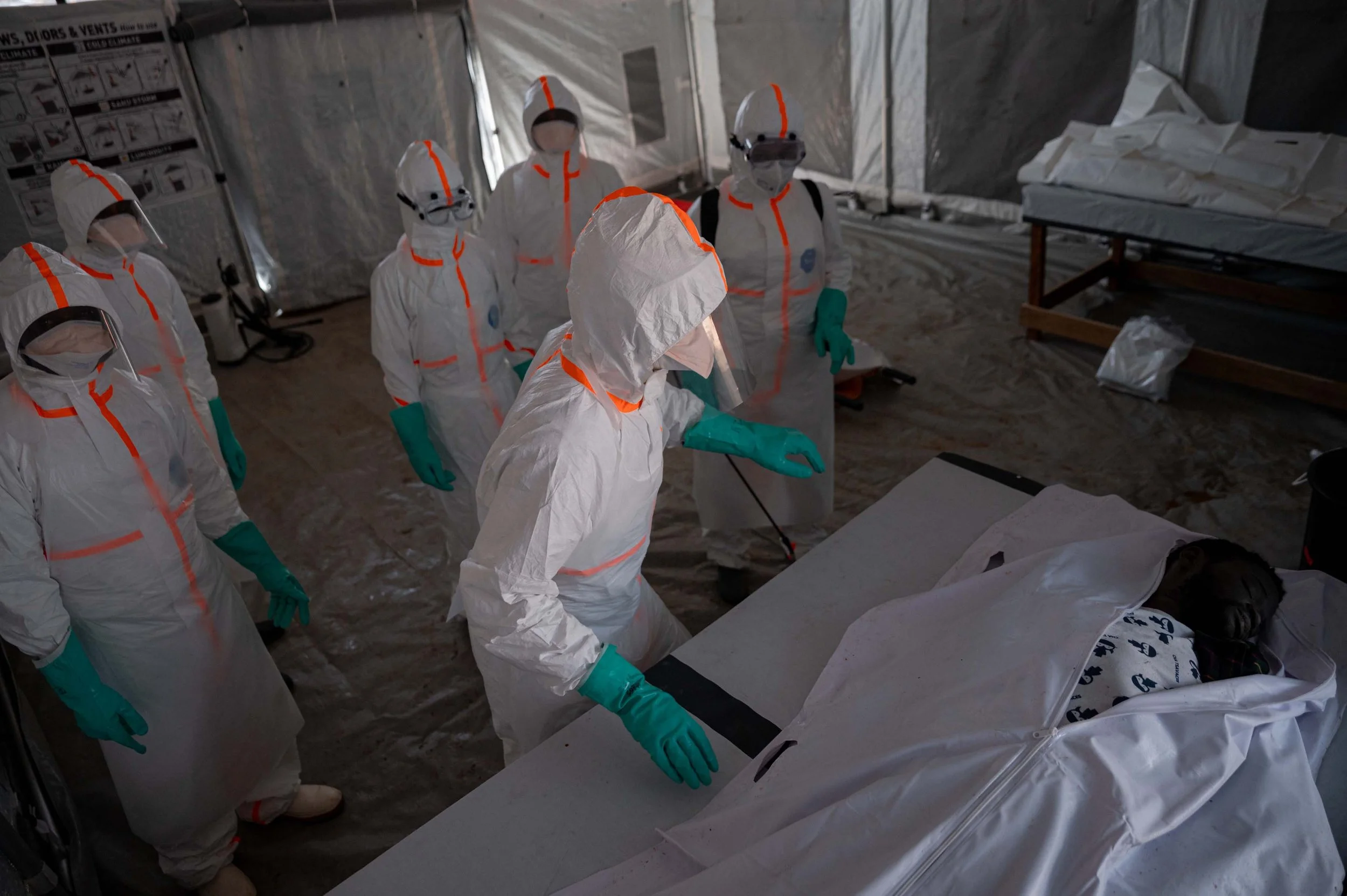
A team of doctors wearing protective suits works in a red zone inside the morgue, surrounded by three bodies of people who died from Ebola virus disease, awaiting burial. They carry out the final adjustments of a body bag and show the face of the deceased to family members for identification before its transfer to the cemetery in Bunia, Ituri Province, Democratic Republic of the Congo, on June 13, 2026.
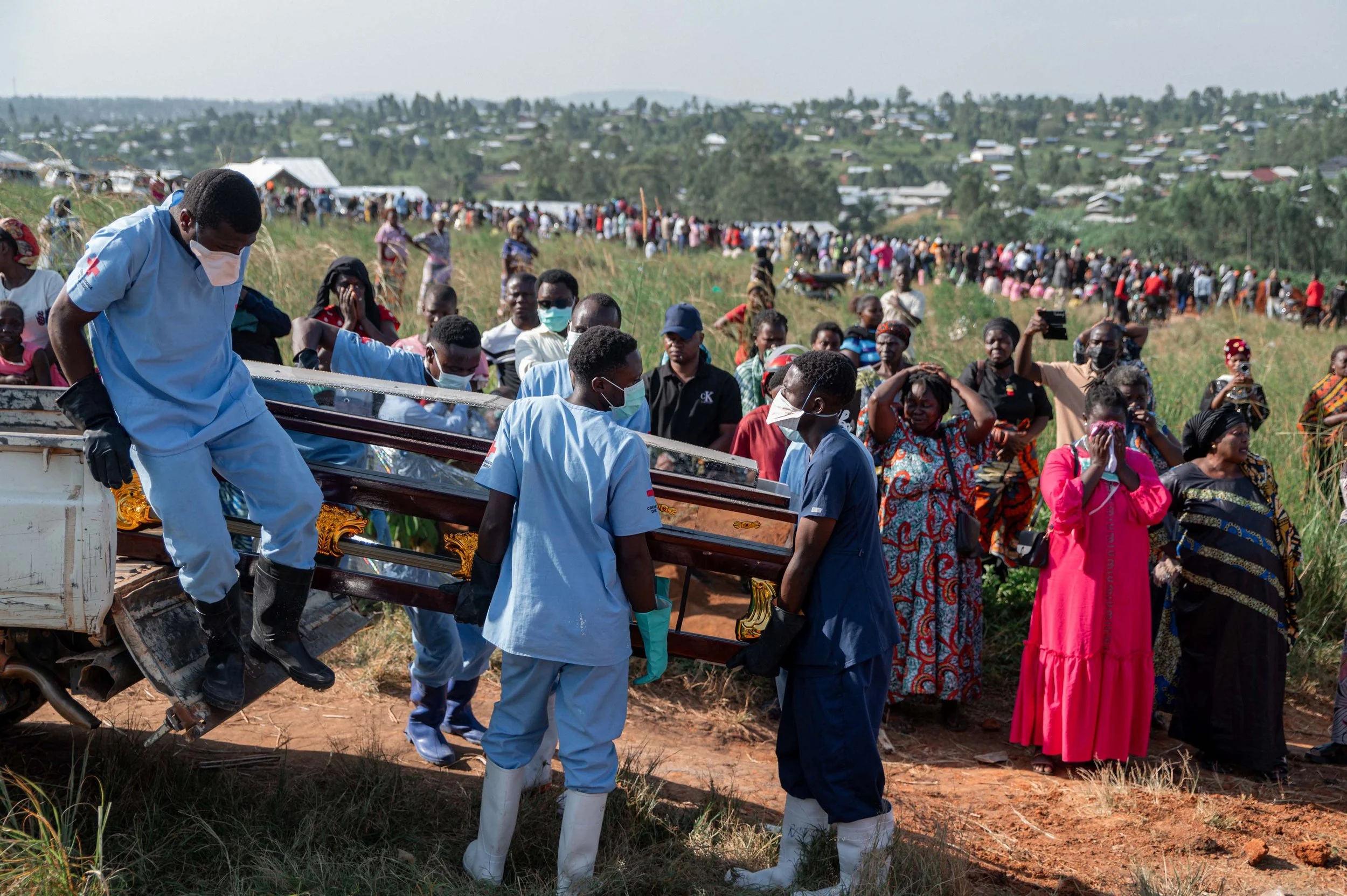
Family members and a group of midwives cry upon the arrival of the body of their relative, who died from Ebola virus disease, at the cemetery. The body, transported by Red Cross volunteers involved in safe and dignified burial operations, is being buried in Bunia, Ituri Province, Democratic Republic of the Congo, on June 13, 2026.
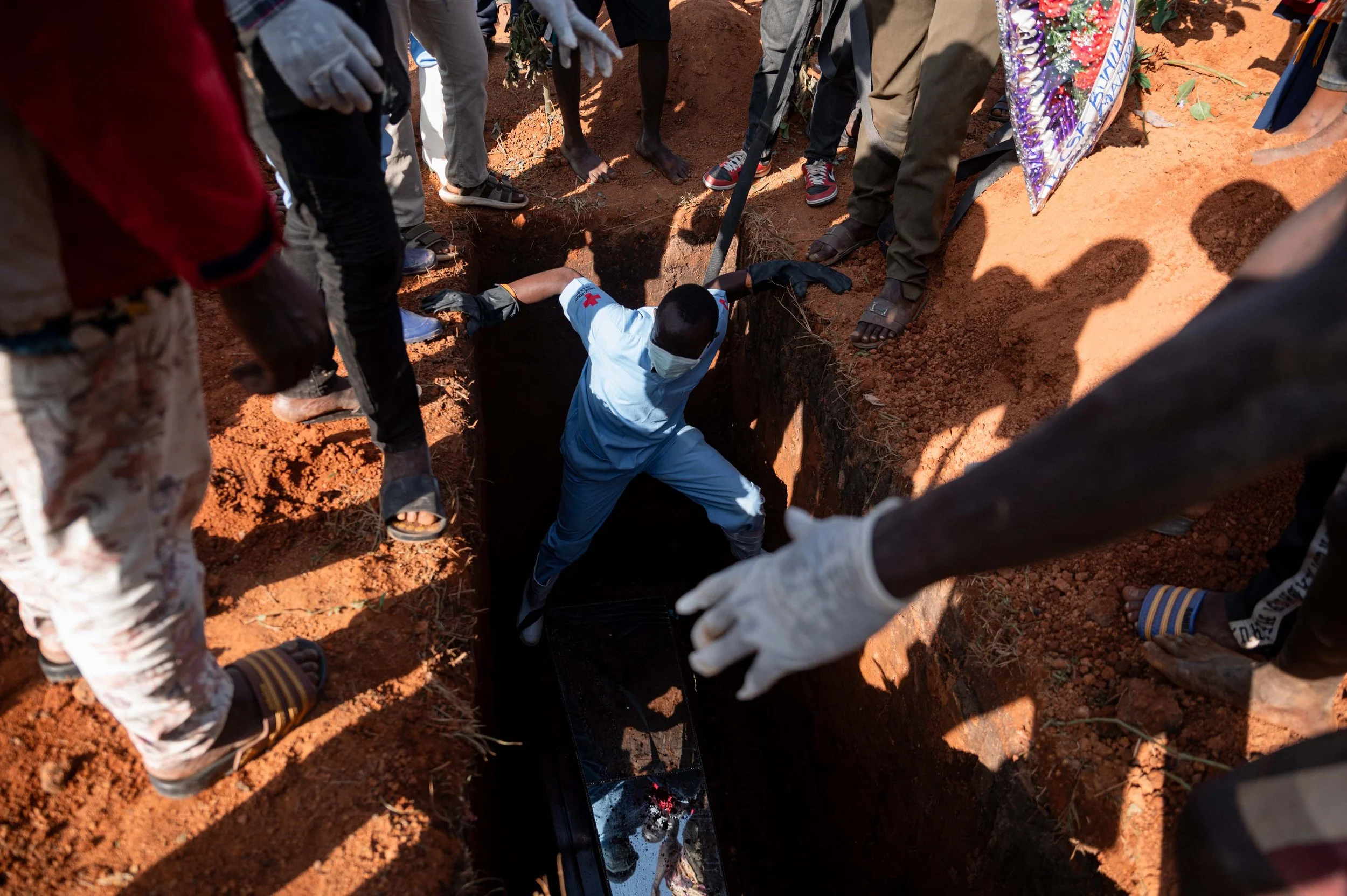
Red Cross volunteers involved in safe and dignified burial operations proceed with the burial of a person who died from Ebola virus disease. After placing the body in the grave, they leave the site and complete the burial at the cemetery in Bunia, Ituri Province, Democratic Republic of the Congo, on June 13, 2026.
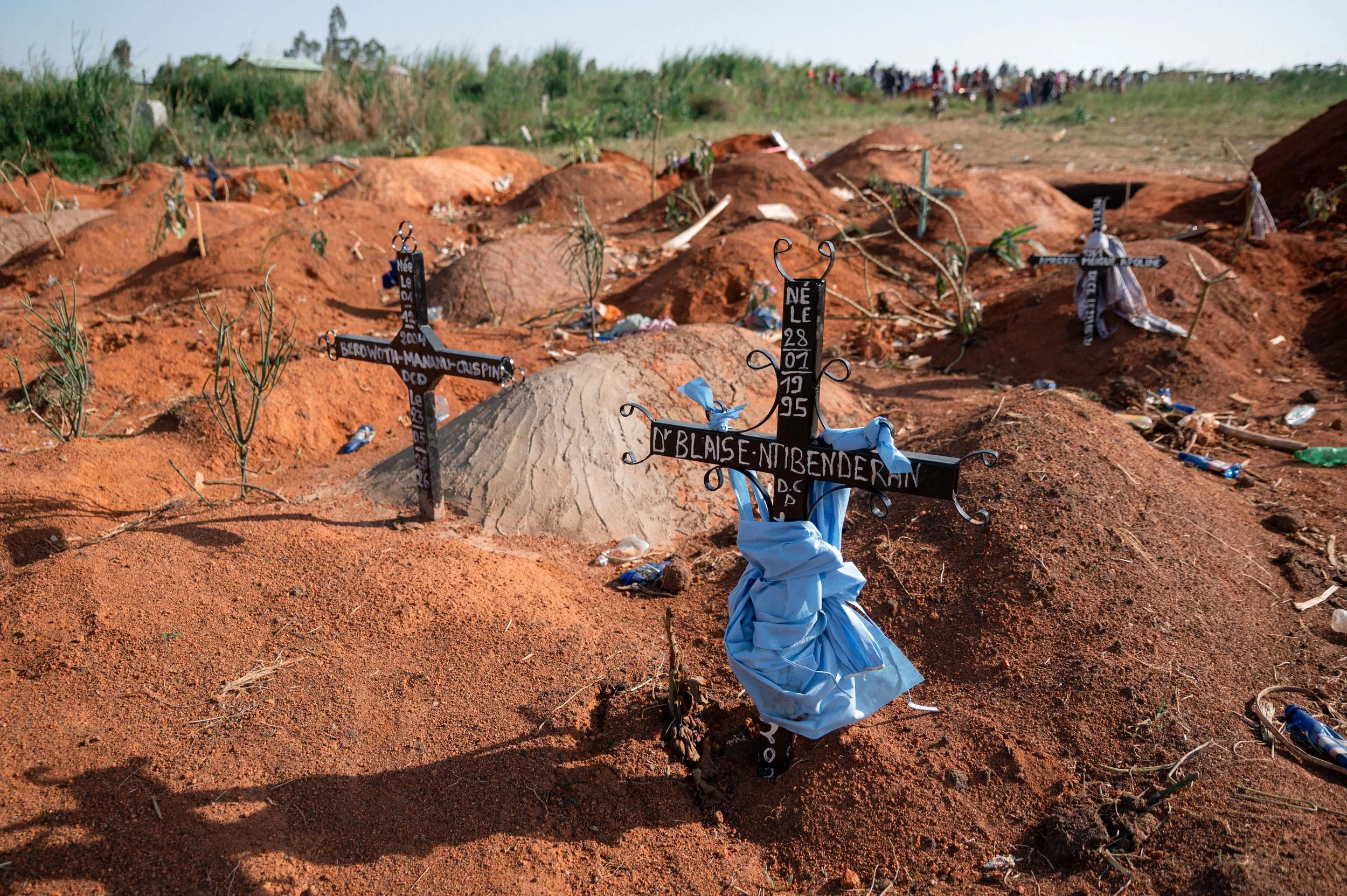
view of Nyamurongo cemetery, located in Ndibakodu neighborhood, one of the burial sites receiving a large number of people who have died from Ebola virus disease since the beginning of the outbreak, in Bunia, Ituri Province, Democratic Republic of the Congo, on June 13, 2026.
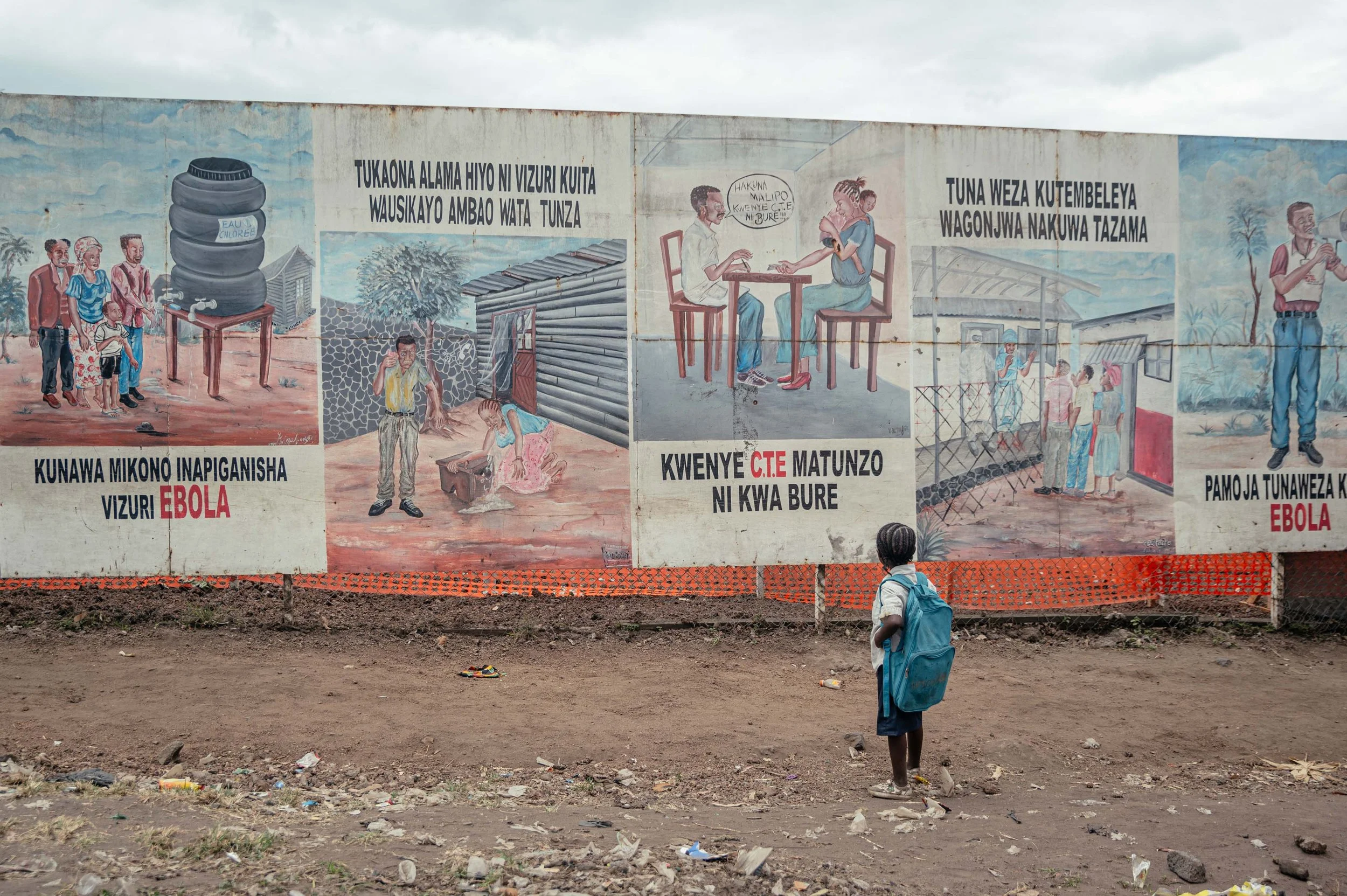
A child returning from school stops to look at Ebola awareness illustrations displayed on the signboards of the Ebola Treatment Center (ETC) in Munigi. Goma, Munigi, June 2, 2026.
About the work
Each day before dawn, hundreds of miners descend into the depths of the Mongbwalu mines. The search for gold has for decades been the economic lifeblood of this isolated town in the northeastern Ituri province of Democratic Republic of the Congo. This activity, essential to the survival of thousands of families, has also become one of the main factors worsening a catastrophic outbreak of the Ebola virus.
Many in the community have already lost loved ones and are terrified of Ebola. Yet every day, they return to work. Because without gold, there is no income, and without income, there is no food for their families.
Ituri has been marked by years of armed conflict. Populations are trapped in poverty, and standards of healthcare are poor, mining is also an insecure profession, with men and women both forced to travel far to find new opportunities to dig. These factors have spread the virus far from its origin point, with over 2 786 lives lost as of August 2026.
Through portraying the lives of the miners, the affected families, and frontline healthcare workers, this project explores how artisanal gold mining, population displacement, and precarious living conditions have influenced the spread of the deadliest epidemic the DRC has ever seen.
About the Photographer
Born in August 2004 in Goma, in the eastern Democratic Republic of the Congo, Jospin Mwisha is a documentary photojournalist covering conflict, humanitarian crises and the social realities of his country.
A freelance photographer for Agence France-Presse (AFP), his documentary approach focuses on the human stories behind war, population displacement, health crises and the resilience of communities. His work combines photojournalism and visual storytelling, driven by a desire to bear witness to reality and build connections between affected communities, bringing their stories to the wider world.
He trained in multimedia through the LTA Académie programme before being selected for a photojournalism mentorship at Efotho in 2024. He also holds a Bachelor's degree in Information and Communication Sciences from UNIC University.
His work has documented the M23 conflict in eastern DRC, as well as the Ebola outbreak in Ituri. He has also explored the living conditions of mining communities, highlighting the links between artisanal gold mining, economic pressures and humanitarian crises.
A finalist for the 2025 Ian Parry Photojournalism Grant and one of five nominees for the 2026 Visa d'Or News, Mwisha also participated in the exhibition Goma, la bascule at the Bayeux Calvados-Normandy Award. Through his work, Jospin Mwisha sees photography as a tool for preserving memory, bearing witness and connecting the world.